



- Japan Tips
Clothes Shopping in Japan: Japan Sizes to US Clothing Sizes (and UK and EU Sizes Too)
It’s well-known that Japanese people have their own distinct style. You’ll see extremely colourful outfits full of frills and inspired by kawaii culture, but you’ll also see the smart, preppy style heavily influenced by US collegiate clothing. There’s a little bit of everything.
However, foreigners often find that clothes shopping in Japan can feel daunting due to the Japan sizes to US clothing discrepancy, with many common US sizes considered ‘plus size’ in Japan. Because of this, it can be much harder to find clothing that suits westerners.
In this guide, we’ll help you to understand Japanese clothes sizes and how they match up to UK and US sizing. We’ll include Japanese clothing size charts, as well as Japan sizes to US size clothing comparisons so you can make more accurate decisions when buying clothes in Japan. And, we’ve even put together a section on popular Japanese clothing stores and brands for you to keep an eye out for.
Quick answers
-
Women’s sizes: the Japanese size number is usually about five higher than the US number. A US 4 is about a Japanese 9.
-
Men’s sizes: Japanese labels run about one size smaller than US labels. A Japanese L is about a US M.
-
Size F: short for “free size”, cut for an average Japanese frame.
- Larger sizes: see the plus size and stores sections below.

Japanese clothes sizes and how they convert to US sizes
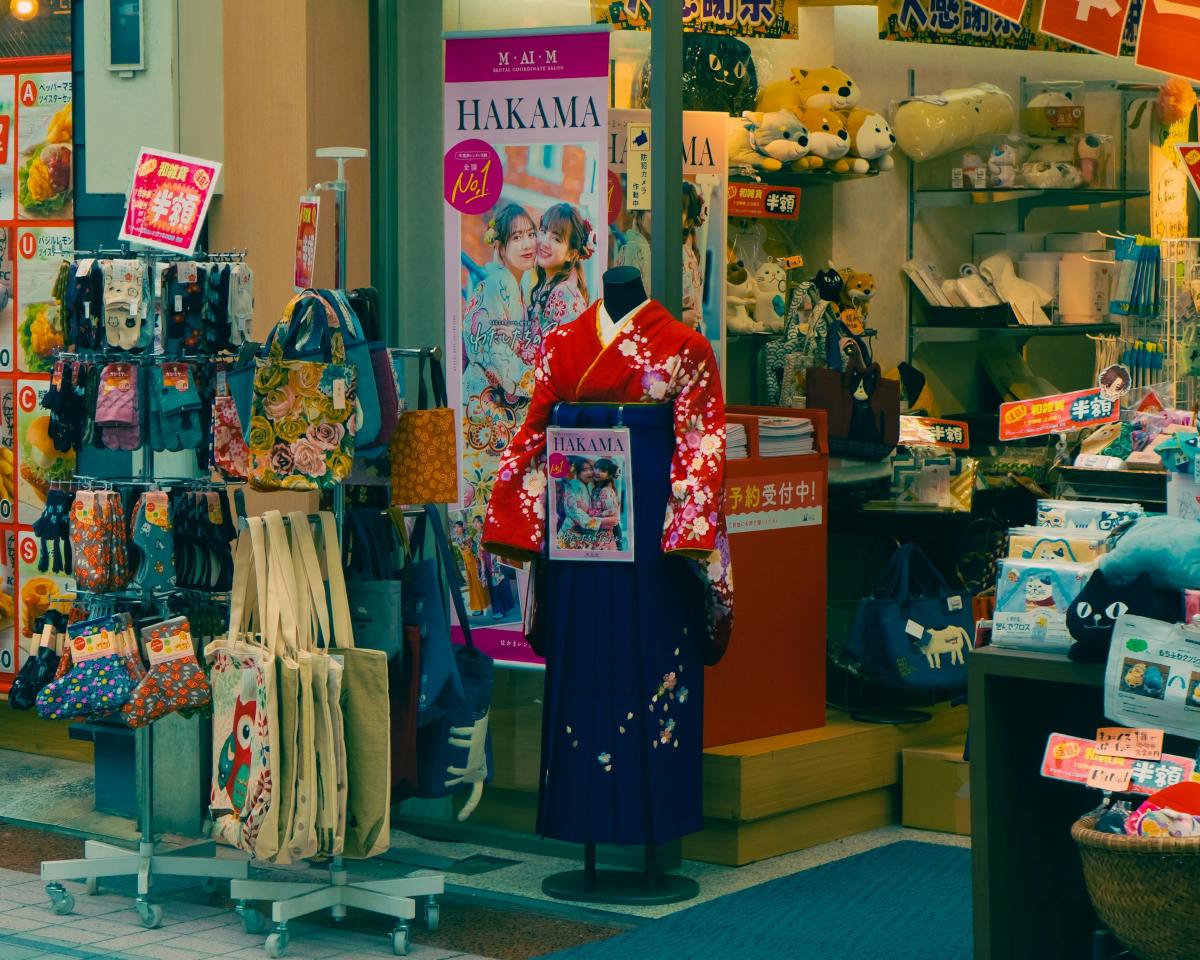
What does size F mean in Japan?
Size F stands for “free size” (フリーサイズ). It is a one-size label meant to fit a range of bodies, and you will see it mostly on tops, skirts and accessories in boutiques and select shops. Free-size items are generally cut for an average Japanese frame, roughly a Japanese M on someone around 158 cm (5′ 2″).
-
Check the measurements: compare shoulder width and length in centimeters on the tag or product page.
-
Look at the fabric: stretchy or oversized cuts are more forgiving.
- Compare store types: stores that label S, M, L and LL give you more choice than boutiques that stock only F.
Japanese XXL, LL and 3L: what size is that?
Above 4L, expect to shop online or at a specialist store, covered in the plus size section below.
Japan men’s size chart & Japan to US size clothing tips
Here we’ll look at the differences in size between various types of men’s clothing. We’ll also compare the Japanese sizes to US size clothing so you can see the differences more clearly.
Men’s shirts
For men’s shirt and collar sizes, the US and UK use the same measurements. However, in Japan, for each US or UK half-size, the Japanese size goes up by one. So, for example, a US or UK shirt size 15 is a Japanese size 38.
Men’s coat and suit sizes
Following a similar sizing pattern to men’s shirts, men’s coats and suit jackets are generally a size smaller in Japan than they are in most other countries. A Japanese size medium, for example, is the equivalent of an international size small, around 84-90cm in the chest.
Men’s trousers
If you’re a man looking to buy trousers in Japan, we recommend following these guidelines:
Men’s shoe sizing in Japan
In Japan, men’s shoes are measured in centimeters, just like waist size. Unfortunately, if you’re a UK size 9 (US size 10) or larger, you won’t have much luck finding your size in most conventional Japanese shoe stores. You’ll probably have to visit a specialist store or shop online for your size.
You can also read our separate blog post about shopping for and buying shoes in Japan.

Japan women’s size chart & Japan size to US size women’s clothing
Women’s clothing sizes in Japan
Women’s clothing, including dresses, jackets, shirts, and t-shirts are a lot smaller in Japan. If you’re used to US sizing, Japanese clothing is normally five sizes larger. For example, if you’re a size 4 in US women’s clothing, you’re most likely a size 9 in Japan.
More familiar with UK clothing sizing? The jump in sizes isn’t quite as great as with US women’s clothing. We recommend going just one size up from your usual UK size when shopping for women’s clothes in Japan. If you’re a size 8, then a size 9 in Japan should fit best.
As with all of our advice, these are only guidelines. Different brands will fit differently and therefore might not fit our formula – trying clothes on when possible is always your best bet!
Some charts differ by a size. Mercari’s marketplace chart, for instance, lists a US 4 as a Japanese 7, so check the brand’s own size guide when it has one.
Japanese women’s trousers sizes
Westerners are used to seeing trousers labeled with waist measurements in inches. However, in Japan, they use centimeters so you might have to get used to calculating what this is in inches. Some brands might include the measurements in inches though, so always look out for that.
Alternatively, you might see trousers labeled as small, medium and large. In this case, we would recommend going at least one size up in Japan.
Japanese bra sizes
Bras in Japan are measured in the same way as most countries – by cup and by band (underbust). Despite using the same measurements as Western countries, Japanese bra sizes do also come up smaller than in the US and the UK.
Because of this, we’d recommend going a size or two up from what you’d usually wear. If you’d usually wear a US B cup, you’d be better off going for a Japanese C cup.
For bra band sizes, it’s similar to how they measure your waist for trousers in Japan – they use centimeters instead of inches. US and UK bra sizes go up in increments of two, but Japanese bra sizes go up in multiples of five. A Japanese 65 is the equivalent of a US and UK 30, a 70 is the same as a 32, and so on.

Japanese clothes stores: where to shop by need
Everyday and budget stores
-
Uniqlo and GU: Uniqlo is known for everyday basics, and GU is its cheaper, more trend-led sister brand. In-store size ranges are usually narrower than online, so check the Uniqlo Japan online store for larger sizes.
-
Muji: known for boxy, natural cuts, which can give a roomier fit. Here’s their Japanese site.
- Shimamura: a budget chain found in residential areas across the country, with a dedicated section for larger sizes and an online store here.
Plus size clothing in Japan
The availability of plus size in Japan has improved, reflecting a broader acceptance and catering to a more diverse size range. Japanese plus size fashion doesn’t exactly mirror Western definitions, typically starting at XL.
Stores like Uniqlo, as well as international brands such as H&M and GAP, now offer more Japan mens clothes and women’s clothing in plus sizes, making clothes shopping in Japan more inclusive.
-
Sakazen: plus-size menswear online and in stores up to size 10L.
-
Shimamura: a plus-size section for men, with the women’s line sold as Queen Size.
-
Aoki: tall and plus-size sections for men, strongest on suits and work clothes, in stores nationwide.
- Isetan: the Shinjuku department store has a floor of plus-size clothing, and its online store offers tall sizes for women up to 175 cm.
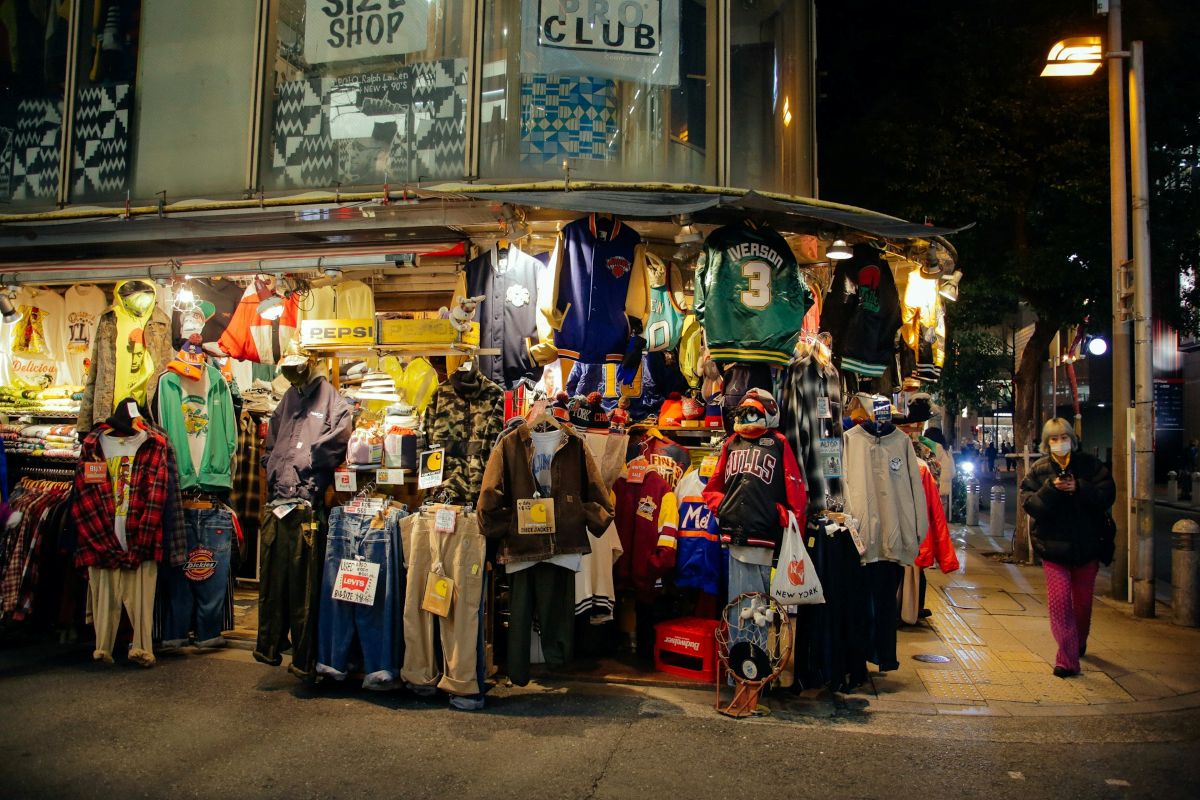
Second-hand and online
Clothes shopping in Japan: fitting rooms, returns and phrases
Useful phrases for buying clothes in Japan
Time to shop, shop, shop!
Now you’ve got a better idea of how different Japanese clothes size up compared to how they do in the UK and the US, it’s time to go out and get shopping. Use our guidance to help you choose clothes in the right size for you.
It might involve some trial and error at first, but we’re confident you’ll get the hang of it in no time. Shopping for a job interview? Here’s everything you need to know about ALT dress codes.
Japanese clothing size FAQs
What does size F mean in Japan?
What is a Japanese XXL in US sizes?
Are Japanese clothing sizes smaller than US sizes?
Where can I find larger sizes in Japan?
