



- Japan Tips
Cost of living in Japan vs US: Which is Cheaper in 2026?
Is Japan cheaper to live in than the US?
Yes, in most cases the cost of living in Japan is cheaper than in the US, particularly for rent, utility bills, transport and healthcare. However, the costs vary depending on where you’re living in Japan and your lifestyle. Here is a comparison of living costs in Japan vs the US in US dollars.
Japan vs US Cost of Living Comparison (2026 Prices)
| Category | Cost in Japan | Cost in US | Which is cheaper? |
| Accomodation | $544 a month | $1671 a month | Japan |
| Utility bills | $154 per month | $212 per month | Japan |
| Groceries | $73 for 17 items | $99 for 17 items | Japan |
| Transport | $1-2 a bus ride | $1-2 a bus ride | Similar |
| Internet | $30-50 per month | $60-90 per month | Japan |
Data based on Interac staff research and Numbeo comparison between Japan and US.
On average, it is cheaper to live in Japan than it is in the US. If you’re considering moving to Japan to work or weighing up teaching salaries in Japan versus the US, it’s important to do background research into how much day-to-day life will cost in your local area of Japan.

Is Tokyo cheaper than New York?
According to Numbeo, the cost of living (including rent) in New York is 150.9% higher than in Tokyo. If you’re moving from a big city in the US to Tokyo, you’ll likely have a higher standard of living in Japan with the same amount of money. In short, nearly everything in Japan is cheaper.
You may also want to check out our guides to the cost of living in Sendai vs Tokyo, and the cost of living in Tokyo vs Osaka, as prices in Tokyo are higher than in other cities or rural Japan.
Is rented accommodation cheaper in Japan or the US?
In general, rented accommodation is cheaper in Japan than in the US. It goes without saying that when it comes to rented accommodation, the cost of your living quarters in Japan will vary depending on what type you choose, and which area you live in.
For example, some inner city areas in Tokyo contain some of the most expensive real estate in the world – this is true across many of the big cities in Japan, but as Tokyo is the capital and largest city, the costs are magnified.
However, that’s not to say that everywhere in these big cities is expensive. Japan is densely populated, and many tiny apartments in a city like Tokyo can be found for good value. This differs somewhat from the US, where much of the more valuable land is in the large houses of suburbia, although in cities like New York this is not really the case.
On average, rent in Japan is cheaper than the US; monthly costs for three-bedroom apartments outside the city centre tend to range around 118,404 yen ($742), whereas family rent in the US can rise to under $3,000 ($2,227).
If you’re looking for spaces in Tokyo or other popular areas, this can rise up to 100,000 yen ($663) for a single person, but this price hike can also be expected in the bigger cities in the US.
Read our guide to moving into an apartment in Japan for more information.

Is buying a house cheaper in Japan or the US?
If you’re looking to become a homeowner when you make the switch to Japan, it’s worth bearing in mind that the Japanese housing market is competitive, and as such, costly.
In the US, the average price per square metre to buy a residence in the city center is around $3,388, whereas in Japan a comparable figure is $6,039.
However, homes in rural areas are often cheaper than in the US. Japanese houses are often considered depreciating assets (like cars) and are cheaper due to rapid devaluation.
Japan offers more affordable, smaller, and newer-built options (or very cheap, older fixer-uppers), so can be an attractive option if you’re looking to buy.
Are utilities cheaper in Japan or the US?
On average, utilities like electricity, heating and water are cheaper in Japan than in the US. Once you have sorted the roof over your head, the next most important factor to think about when managing your expenses in Japan is utilities.
Depending on your rent agreement, utilities may already fully or partially be included with your rent payment, but if they’re not, each one will need to be arranged.
By and large, electricity will be the most expensive utility, with gas and water less so. You can expect to spend around $154 dollars per month for Electricity, Heating, Cooling, Water, and Garbage for an apartment in Japan, compared to $212 for an equivalent apartment in the US.
Of course, this also depends on what utility installations you have in your accommodation – in a typical Japanese apartment, gas will be used for cooking and water, although in more modern homes induction heaters may be present.
Here are some budgeting tips for living in Japan, to help save even more money.
Are groceries cheaper in Japan or the US?
On average, groceries are cheaper in Japan than in the US, but certain imported fresh products (notably, bananas) may be more expensive in Japan. One of the most exciting parts of a move to Japan is the realisation that you will now have access to a wide array of enticing new food and drink options.
In 2024, American folks were forking out an average of 36.1% more for their grocery shopping than people in the Japan!
However, if you’re just picking up a few essentials on your way home from work, prices can vary. Here’s a quick table to illustrate what we mean:
| Food Item | Japan (Yen/USD) | US (USD) |
| Milk (regular, 1 liter) | 211.55 ¥ (1.44 $) | 1.06 $ |
| Loaf of fresh white bread (500G) | 227.09 ¥ (1.55 $) | 3.56 $ |
| Rice (white, 1KG) | 524.63 ¥ (3.57 $) | 4.54 $ |
| Eggs (regular, 12) | 326.75 ¥ (2.22 $) | 3.73 $ |
| Local Cheese (1KG) | 1,611.47 ¥ (10.97 $) | 12.83 $ |
| Chicken Fillets (1KG) | 921.31 ¥ (6.27 $) | 12.52 $ |
| Beef Round (1KG) | 2,313.05 ¥ (15.74 $) | 15.97 $ |
| Apples (1KG) | 679.66 ¥ (4.63 $) | 5.31 $ |
| Banana (1KG) | 330.30 ¥ (2.25 $) | 1.68 $ |
| Oranges (1KG) | 613.37 ¥ (4.17 $) | 4.49 $ |
| Tomato (1KG) | 642.55 ¥ (4.37 $) | 4.90 $ |
| Potato (1KG) | 388.29 ¥ (2.64 $) | 3.01 $ |
| Onion (1KG) | 334.72 ¥ (2.28 $) | 3.04 $ |
| Lettuce (1 head) | 185.46 ¥ (1.26 $) | 2.15 $ |
| Water (1.5 liter bottle) | 127.51 ¥ (0.87 $) | 2.17 $ |
| Bottle of Wine (Mid-Range) | 1,000.00 ¥ (6.81 $) | 15.00 $ |
| Imported Beer (0.33 liter bottle) | 403.88 ¥ (2.75 $) | 3.54 $ |
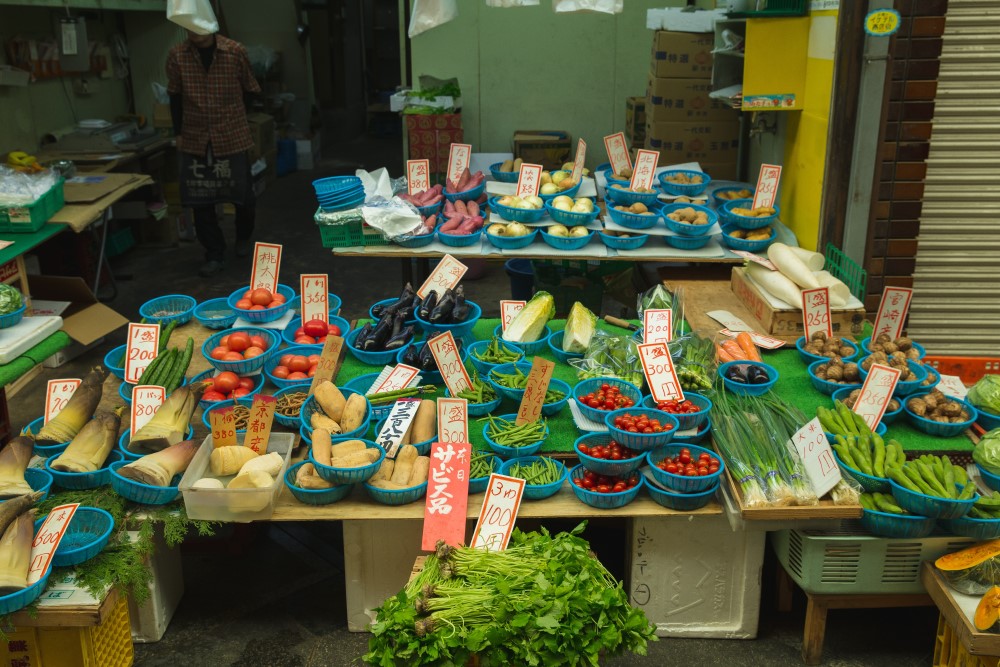
That said, local markets can offer good value, particularly in pre-cooked items, and such places are always great for their variety and quality of local delicacies.
Check out our guide to Japanese convenience stores for how to make the most of them.
Is dining out cheaper in Japan or the US?
No move to Japan is complete without considering which restaurants you’ll visit first. In any city or town across the country, there will be plenty of options to whet your appetite, from sushi spots, to hamburger diners like the Japanese McDonald’s, to curry houses and much more.
The good news is that, compared to the US, dining out in Japan is relatively quite a lot cheaper. Of course, this depends on the restaurant you go to, but a good restaurant may set you back around 5,600 yen ($37.4), with less formal affairs like hamburger diners costing around 750 yen ($4.95).
If you’re in Osaka – the foodie capital of Japan – here are some cheap eateries to try.
In the US, you’d be paying on average 97% more for dinner in a restaurant and 112% more for a fast food meal, so you have every reason to go and enjoy your local eateries in Japan.
Are regular services cheaper in Japan vs the US?
Regular services like the barbers are always worth thinking about when comparing the cost of living in Japan vs the US.
In the US, the average price of a haircut is between $28 and $50, and can rise above that figure in some areas. In Japan, it’s a similar price of around $27 to $47 for a typical cut and blow dry, with basic ‘quick cut’ haircuts available for under $10.
The reason for this is not only to do with location – there are ‘quick-cut’ barbers in many places that offer great value and quality, such as QB House, that offers cuts for 1,200 yen ($8.17) as well as the inner-city barbers that offer a premium-standard service.
Is transportation cheaper in Japan vs the US?
On average, public transport in Japan is cheaper than in the US. If there’s one thing that Japanese people pride themselves on, it is efficient and punctual transportation. From bullet trains, to metros, to bus connections and more, public transportation is not only very reliable and clean but also around the same price as the US equivalent.
One-way tickets to get around a city are usually around $2 in local currency, and for a reasonable amount, you can use bullet trains to get around the country at breakneck speed. If you are regularly travelling between cities, there are lots of commuter passes available.
Here are some top tips for using the subway, railway and taxi services in Japan.
In terms of car travel, gas prices are more or less similar in Japan and the US, although this again depends on which area you are comparing. One area where the US is cheaper is taxis, so we recommend using public transport in Japan.
Is entertainment cheaper in Japan or the US?
Entertainment comes in all shapes and sizes, and both Japan and the US are global powerhouses in terms of cultural output. As far as the cost of enjoying this entertainment is concerned, there are some notable differences.
For example, gyms tend to be more expensive in Japan than the US, while a cinema ticket tend to be more expensive in the US than Japan. However, like many of the prices in this guide, this can depend on the area of America or Japan you’re living in.
On the flipside, having high-speed internet access is on average lower in Japan for price than the US; a good fiber optic connection usually costs around $32 per month, compared to $72 in the US. This is 124% lower on average than the US, which means that indoor entertainment like streaming or video gaming could end up costing less.

Why is Japan cheaper than the US?
- Efficient public transport reduces cars
- Smaller housing sizes
- Lower restaurant prices
- Strong convenience store food culture
- Lower healthcare costs
The last word on the cost of living in Japan vs the US
“Most new ALTs are surprised by how affordable daily life can be in Japan, especially when it comes to eating out and public transport.”
– Interac ALT in Tokyo
For teachers, ALTs, and expats, Japan often offers a comfortable standard of living despite lower salaries. It’s important to take this into consideration if you’re weighing up whether to move to Japan, and how much you’ll spend and save each month.
Overall, Japan is typically cheaper than the US, particularly for rent, dining out, and public transport. Healthcare is also cheaper in Japan than in the US. However, major cities like Tokyo can still be expensive depending on lifestyle, and you may find some of your favourite foods from home to be more expensive than you’re used to!
As the cost of living in Japan is so much cheaper than the US, those looking to work abroad, either to travel or as an ALT, can afford to live a fulfilling lifestyle, even if the salary may not look too high when compared with western standards.
FAQs: Cost of Living in Japan vs the US
Is Japan cheaper than the US overall?
How much money do you need to live comfortably in Japan?
Is Tokyo more expensive than US cities?
Looking for more help when planning your big move to Japan? Get in touch with us today for more help on Japanese social customs, careers and more
