



- Life & Culture
Where’s the best place for ALTs to live in Japan? Countryside vs city living
Becoming an Assistant Language Teacher (ALT) in Japan provides the life-changing opportunity to explore the beautiful country, take in the stunning scenery and experience the vibrant culture. Of course, there are different sides to Japan that offer various types of lifestyles.
Of the Interac ALTs, almost a quarter are based in designated cities, making this the most common placement locale, followed by 14% of ALTs who reside in non-designated cities with a population of between 50 and 100 thousand. In comparison, only 1.88% are based in villages and 11.33% are located in towns. This data shows many ALTs find themselves in regional cities that combine aspects of both lifestyles.
However, with differing costs, language barriers, and convenience, there are pros and cons to countryside (Inaka) and city living. In this blog, we’ll explore what to expect from these different lifestyles and how to get the most out of your move to Japan.
Countryside living: Pros and cons

Karuizawa (Nagano), Nishigo (Fukushima), and Yoshida (Shizuoka) are examples of rural areas where ALTs may be based.
The pros of living in Japan’s countryside
Below are five key benefits of living in rural Japan:
Scenic environment
While the countryside might not offer a lively nightlife, it’s rich in gorgeous nature, perfect for people who want to enjoy peace and quiet and adopt a slower lifestyle.
Brian McDonough, Entry Manager at Interac, said: “With the breathtaking scenery, residents can enjoy outdoor activities like hiking and benefit from the cleaner air and a more relaxed pace than the city’s rat race.”
Serina Ueda, an Interac ALT, added: “Travelling to smaller cities and towns has shown me a quieter, more authentic side of Japan, one that you simply don’t experience in major cities. These local discoveries, from hidden shrines to charming family-run restaurants, have made me fall in love with Japan even more.”
Tight-knit community
With the small population in rural areas of Japan, there’s an opportunity to get to know your neighbours better. A close-knit community is the backbone of countryside living, where people are often found to be friendly, supportive and open to new friendships. Rural living is a good opportunity to practice language skills, as English is generally less common in rural areas, so everyday interactions are more likely to take place in Japanese.
Brian McDonough continued: “To establish relationships with communities in rural areas, it’s important to actively participate in local events and regularly make the effort to communicate with your neighbours, ensuring you share about yourself and show interest in their lives, too.”
On his personal experience as an Interac ALT in Hokkaido, Jack Freeburn added: “I ventured out and met locals who invited me to various things, including a project to clean up the local beach. These kind people have kept me upbeat on my adventure.”
Cheaper living costs
Living in Japan’s countryside is typically cheaper than in cities, although the cost of living varies considerably depending on the city. Major metropolitan areas like Tokyo are the most expensive, while many regional cities are considerably more affordable.
Tokyo sits at the highest end of the scale, with the average monthly rent for a one-bedroom apartment reportedly ranging from ¥150,000 to ¥250,000 (£700-£1,167). However, the average nationwide apartment rental cost is ¥50,000, with rural areas having much lower rent. Living comfortably in rural Japan is estimated to cost ¥100,000–¥150,000 (£467–£700) per month.
Low crime rates
The crime rate in rural areas is much lower than in cities. In Osaka, Japan’s most crime-ridden city, one person in 129, on average, is a crime victim, according to research. In comparison, one person in 484 is a crime victim in rural Iwate Prefecture.
However, crime rates generally rise with population density, meaning larger metropolitan areas such as Osaka tend to record more offences than regional cities.
Brian McDonough said: “While the crime rate in Osaka is much lower than in other global metropolises, such as London and New York, rural Japan is still deemed much safer. Violent crime is almost unheard of in Japan’s countryside, and the strong community presence ensures many are looking out for each other.”
What are the cons of ALTs living in the countryside?

While there are great benefits to living in Japan’s countryside, the lifestyle isn’t for everyone. Below are five disadvantages that you should be aware of:
Inconvenient public transport
A previous study asked people which aspects of rural life in Japan they had only fully understood the drawbacks of after moving. The top answer, given by 35.8%, was inconvenient transportation.
In the countryside, there are very few taxis available, limited bus routes, and often infrequent bus services. Driving in Japan is often necessary in rural areas, especially if you have a long commute to placements. However, Interac can help arrange leased cars for ALTs who need to drive because of the placement’s location.
ALT Jack Freeburn said: “I would advise that people who think they can’t handle being isolated to really contemplate if this is for you as well, as you won’t know where you’ll be placed and no guarantees can be made either; cities will be fine, but the countryside towns can be quite far with no trains and limited bus travel.”
Limited social opportunities
While the community of small towns can be fulfilling to many, it can also create some tension. In the above study, ‘annoying interpersonal interactions’ were ranked as the second-highest complaint.
Brian McDonough said: “Due to fewer people residing in rural communities, there is a limited variety of personality types and ages to connect with, especially with many younger residents moving to the city. The low population also makes it harder to maintain the privacy that you usually get in a big, overcrowded city. English speakers are also much less common than in cities, so if you don’t speak Japanese, you may struggle to connect with your neighbours.”
Lack of amenities
A fifth of the survey respondents said a lack of shopping facilities was a tough part of life in the Japanese countryside. While villages will have necessities like supermarkets, large shopping centres and specialist stores are generally less common than in cities, which can make it difficult to find suitable food that meets restricted dietary requirements.
However, it’s not just shopping facilities that are limited in rural villages, but amenities in general, with entertainment activities being a rarity. Other essentials, like schools, may be present but far enough away to create a long commute.
Heavy snowfall and colder conditions
Just over a tenth of respondents from the previously mentioned study said rural areas had ‘large amounts of snowfall’, and a similar amount stated the weather was colder than expected.
Many countryside areas, especially in northern and mountainous regions, experience heavy snowfall and prolonged periods of low temperatures. Compared to properties in larger cities, rural homes may be less well insulated, and heating often isn’t centralised, making indoor spaces noticeably colder. Those not used to these colder conditions may find day-to-day life less comfortable during winter.
City living: Pros and cons
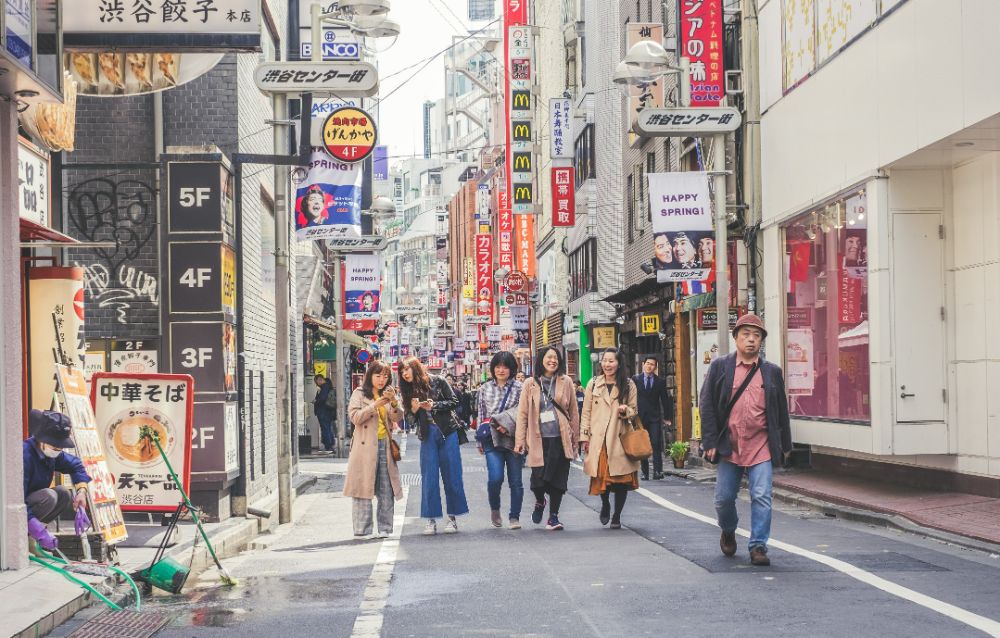
Interac’s city-based ALTs most commonly reside in larger cities like Yokohama, Sapporo, or Fukuoka.
What are the pros of city living in Japan?
Below are the key benefits of living in a city:
Abundant convenience
Cities generally offer easier access to convenience stores, supermarkets, healthcare facilities and shopping than rural areas. Regional cities typically offer everything needed for day-to-day life, with major metropolitan areas providing the widest range of amenities.
Major cities in Japan, such as Tokyo and Osaka, also have some of the world’s biggest transportation hubs featuring trains, subways, buses, and trams that are known for being efficient, clean, and reliable. Additionally, stations in major cities will offer more accessibility, with elevators, ramps, and staff members to assist.
Many regional cities rely more heavily on local trains and buses. Services may be less frequent than in the major cities, but the public transport is generally reliable enough for everyday commuting without needing a car.
Vibrant culture
While the rural areas offer nature and tranquillity, the cities provide a wide range of activities to keep you entertained in your spare time.
Brian McDonough said: “Whether you’re exploring museums, live music venues or the art scene, cities across Japan offer a wide variety of entertainment. World-renowned food is also a large part of Japanese culture, from Michelin-starred restaurants to comforting street food.”
Higher English-speaking population
It’s generally easier to find English-speaking people in cities than in rural areas. English signage and multilingual services also become more common as cities increase in size, particularly in major tourist destinations.
ALTs, who may not be well-versed in both languages, will likely find it far more accessible to live in the city and easier to meet new people.
More social opportunities
Due to the high population, cities typically have a much wider variety of communities, including international residents, allowing you to find the people you connect with best.
As there are also various entertainment options, there’s a greater chance of meeting like-minded people and building a social circle around a shared hobby or interest, but also of developing relationships through activities that break the ice.
Regional cities can also offer close-knit communities while still providing a broader range of clubs, sports and social groups than rural areas.
What are the cons of city living in Japan?

Before deciding where to reside, it’s also important to consider the key disadvantages of living in a city:
Higher cost of living
It’s not just rent that hikes the cost of city living, as food prices are also reportedly marked up 25-30% higher than in the countryside.
Tokyo is by far Japan’s most expensive city, where it’s estimated to cost ¥151,030.9 (£709.4) per month, excluding rent for a single person. In comparison, this cost plummets to ¥126,398.9 ( £586.6) in Yokohama. Many regional cities fall somewhere between these extremes, offering urban amenities without Tokyo-level housing costs.
However, Japan is overall much gentler on the wallet than other countries. For example, the cost of living, including rent in London, United Kingdom, is predicted to be 88% higher than in Tokyo. The cost of accommodation in Japan is also £850 cheaper per month compared to the US.
Compact spaces
Compared to rural areas, you’re often paying more for less space in city accommodation. It’s not just the homes that are smaller, as the larger city centres are often packed full of people and tight spaces.
While the public transport is highly convenient, it can also become heavily crowded during peak times and in the busiest areas. However, homes in regional cities are usually more spacious than those in Tokyo or Osaka.
Higher crime risks
While Japan is considered safe overall, larger metropolitan areas can experience more petty theft (e.g., bicycle theft) than rural areas, especially in tourist attraction areas. However, violent crime is still rare.
Tokyo’s entertainment districts, for example, are stated to have a higher crime rate, especially at night in and around clubs and bars. The areas in Tokyo highlighted as high-risk zones for drink spiking and credit card fraud are Kabukicho, Roppongi, Shibuya, and Ikebukuro.
Brian McDonough added: “As tourists and expats are more likely to be targeted in areas with a higher risk of crime, it’s important to remain vigilant, especially at night. Stick to the well-lit and busy streets, keep your personal belongings secure and hidden, and don’t follow street touts into bars. However, while the crime rate may be higher than in rural areas, Japanese cities remain very safe by international standards.”
Fast-paced lifestyle
Larger cities often have a faster pace of life, with busier commutes and more crowded public spaces, which some may prefer, but without proper care, it can lead to stress and burnout. To avoid sensory overload, residents can spend time in the many peaceful parks, gardens, and waterfalls available in the cities to escape the hustle and bustle. However, many regional cities offer a balance between urban convenience and a more relaxed lifestyle.
Japan’s countryside and cities both offer wonderful advantages as well as important disadvantages to consider. While a rural lifestyle may be more preferable if you want to live more comfortably financially or explore more of Japan’s natural settings, city living may be a better fit if you’re keen to experience the nightlife and access more amenities.
For many ALTs, regional cities offer a balance between these two lifestyles, combining many of the conveniences of urban living with lower costs and easier access to nature. However, ALTs should keep an open mind about their placement location, as it will ultimately depend on the availability of positions.
